
One-, two- and three-car garages
Garage Floor Epoxy in St. Louis, MO
An epoxy garage floor that keeps salt, oil and slush on the surface instead of in your concrete.
- We measure your slab and run a moisture test during a free on-site estimate
- A written quote naming every prep step and coat, with the final price
- Surface prep explained before we grind a single square foot
Why St. Louis Garages Need a Real Coating
Garage floor epoxy draws more questions from St. Louis homeowners than anything else we do, and winter is why. Wikipedia lists about 16.6 inches of snow a year over roughly 14.5 snowy days, with January lows averaging 23.8 F. Every one of those days, cars come home coated in slush and salt brine that melts off onto the garage slab. A sealed epoxy garage floor holds that mess on the surface, where a squeegee sends it outside before it gets into the concrete.
What salt does to bare concrete
MoDOT says the St. Louis region treats 6,400 lane miles of state roads with more than 200 trucks carrying brine and rock salt spreaders. Salty water that drips into a garage works into the pores of bare concrete. When the temperature drops, the water freezes and expands, and when it warms it thaws again. Over years that cycle flakes off the top layer of the slab, a problem called spalling, and leaves rough, pitted tire paths. Salt also leaves white rings that come back no matter how often you scrub. A good garage floor coating stops the water from getting in at all.
Why the old paint or kit failed
Many garages around St. Louis already have something on the floor: gray porch paint, a store kit, or a clear sealer from years ago. Those products usually peel first in the tire paths. Kits depend on acid etching, and etching leaves sealers, oil and weak surface concrete in place, and most are thin water-based epoxies. HomeGuide lists water-based epoxy as lasting about 3 to 5 years versus 10 to 20 years for solid epoxy. Hot tires in July soften a thin film and lift it. We diamond grind all of that off and start on clean concrete.
Older garages and newer ones
Inside city limits, Point2Homes' summary of ACS data puts more than half of homes at 1939 or older, and many garages are small detached buildings with slabs that have been patched more than once. In Florissant, Affton and the other postwar suburbs, attached garages often have seventy years of oil and salt in them. Newer subdivisions in O'Fallon and Wentzville have younger concrete, but it still arrives with a smooth, dense surface that needs grinding before any coating will grip. Each type gets the same careful prep, just different amounts of repair.
How we build the floor
The standard garage system starts with a 100% solids epoxy base coat, which builds thickness and bonds into the ground concrete. On most garages we then broadcast vinyl flake for texture and to hide salt spotting, scrape it smooth and seal it with a clear topcoat. Where the sun reaches through the door, that topcoat should be UV stable, because HomeGuide rates plain epoxy's UV resistance poor to fair. A polyaspartic top layer handles that. If you want a solid color instead of flake, the final coat gets a fine anti-slip grit blended in, giving wet boots some grip.
Timing the install
Summer brings the other challenge. The average July dew point is 66.6 F, and concrete that is cooler than the dew point collects a thin film of moisture. Epoxy rolled over that film can blush and lose adhesion. We check air temperature, humidity, dew point and slab temperature before every coat, and we schedule around muggy mornings. HomeGuide says a full epoxy cure can take as long as a week and advises avoiding driving on new floors for 2 to 7 days, so we tell you exactly when to park based on your system and the weather that week.
Is your garage ready?
Your floor is a good candidate if the slab is structurally sound, stays dry apart from what the car brings in, and you are tired of stains and dust. Big cracks that keep moving, heaving sections or water coming up through the slab need attention first. We look at all of that during the free estimate and tell you plainly what we see. Get a free estimate
What Your Garage Floor Includes
We coat the entire slab on every garage floor epoxy job, edges included, starting at the door seal and running to the back wall.
Diamond grinding
Grinding with dust collection across every square foot and along the edges, removing paint, sealer, salt residue and weak surface concrete.
Spall and crack repair
Salt-pitted areas, cracks and broken joint edges filled and ground flush so the finished floor is continuous.
Old coating removal
Peeling kit epoxy, paint or sealer taken down to bare concrete before anything new goes on.
Base coat and flake or color
A 100% solids epoxy base with full or partial vinyl flake, or a solid color with anti-slip texture.
UV-stable topcoat
A clear polyaspartic or urethane topcoat that resists yellowing where sunlight reaches the floor.
Steps and curbs
If you like, we extend the coating up the garage steps and over the low concrete curb at the base of the walls.
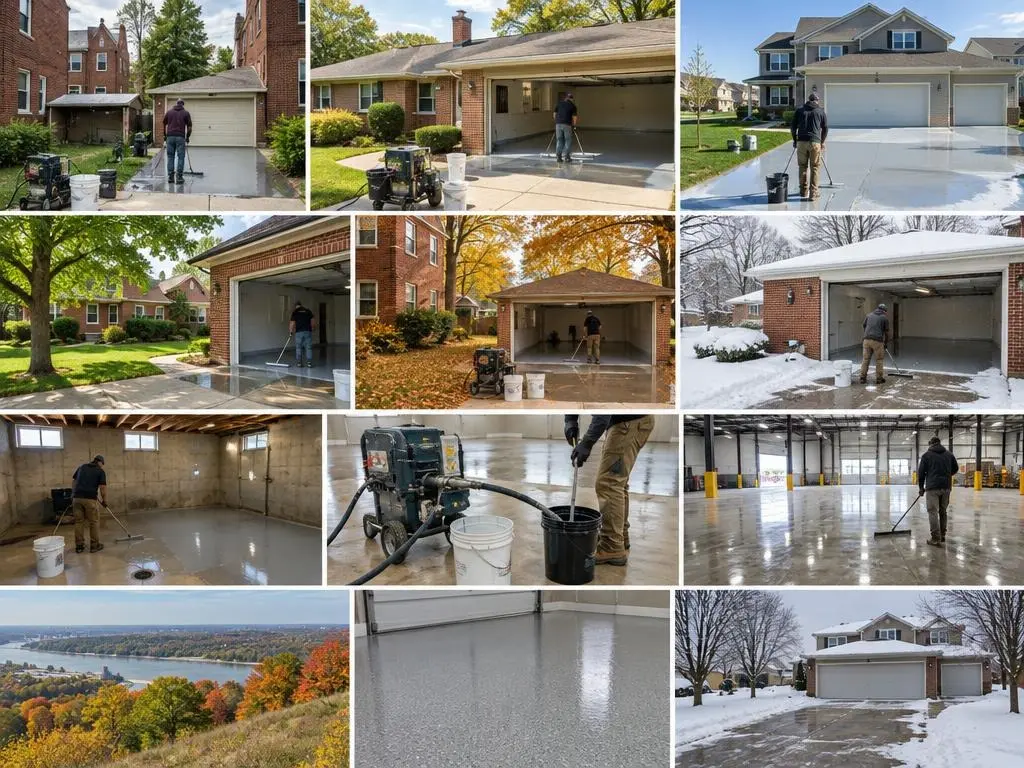
Typical Garage Floor Epoxy Costs
| Garage | Published range | Source |
|---|---|---|
| Installed epoxy, per square foot | $4 to $10 | HomeGuide |
| One-car garage | $1,200 to $3,900 | HomeGuide |
| Two-car garage | $1,600 to $5,800 | HomeGuide |
| Three-car garage | $2,300 to $8,600 | HomeGuide |
| Two-car garage, polyaspartic | $2,000 to $6,900 | HomeGuide |
| Patching cracks and chips | $25 to $250 | This Old House |
Figures are national, taken from This Old House and from HomeGuide's guides to epoxy and polyaspartic. Local St. Louis pricing may not match, and the total shifts with salt damage, any old coating and the finish you pick. Your written estimate sets the price you are charged.
How a Garage Floor Gets Done
1. Estimate and moisture test
We measure the garage, test the slab for moisture, note salt damage, cracks and old coatings, and leave a written quote.
2. Clear and protect
You move cars and stored items out; we tape walls and the door seal and set up dust collection.
3. Grind and repair
The slab is diamond ground, vacuumed, degreased and patched until it is sound and open.
4. Coat in stages
We apply the base coat, then flake or color, then the topcoat, checking humidity, dew point and slab temperature before each one.
5. Cure and hand back
We walk the floor with you and give exact times for foot traffic, storage and parking.
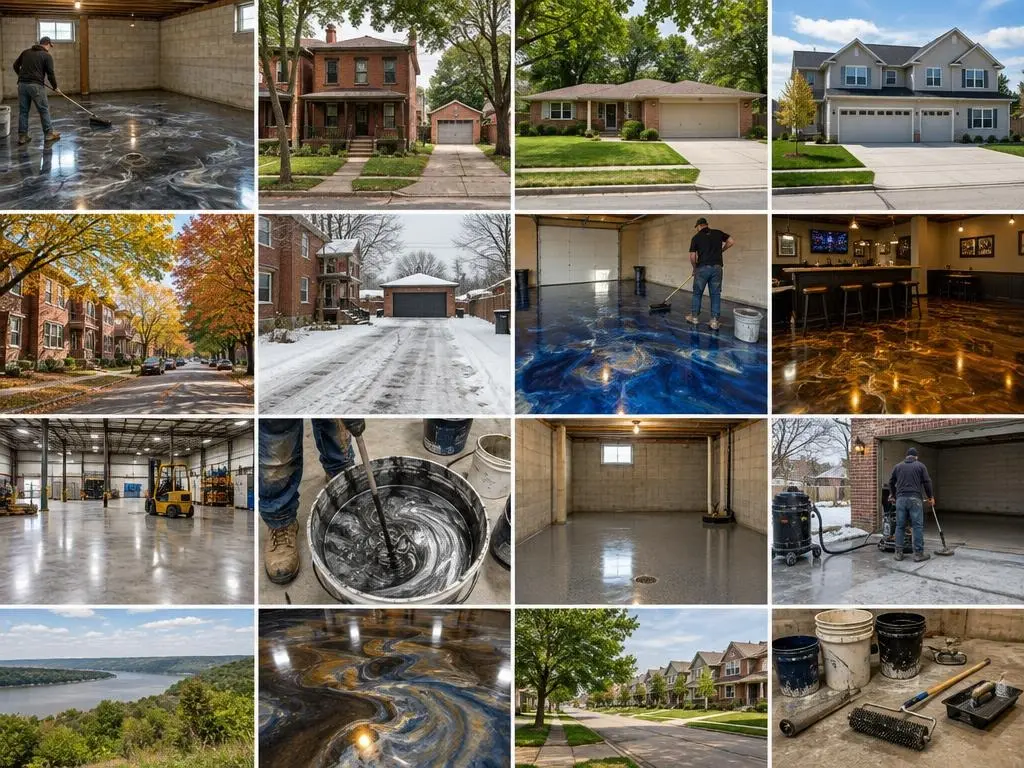
Why Choose Us for Garage Floor Epoxy
Edges sealed all the way
Coating runs right to the walls and door seal so meltwater cannot creep under the edges.
Texture where it matters
Flake or anti-slip aggregate keeps wet boots steady on winter mornings.
Readings, not guesses
We record the conditions before each coat and wait if they are wrong.
Garage Floor Epoxy Questions
What is the price range for garage floor epoxy in St. Louis?
For a two-car garage, HomeGuide's national figures run about $1,600 to $5,800 in epoxy and $2,000 to $6,900 in polyaspartic. Repairing salt spalling, removing an old coating and choosing full flake coverage can push a job within or past those ranges. Measuring and testing your floor comes first, and then we hand you a written number.
Will road salt damage an epoxy garage floor?
Salt does not soak through a sealed coating the way it soaks into bare concrete. Left to dry, it can leave a film that dulls the finish, so we suggest squeegeeing or rinsing meltwater out during the winter. Flake floors also hide salt spotting well between cleanings.
How soon can I park after the garage floor is coated?
HomeGuide advises avoiding driving on new epoxy for 2 to 7 days, while polyaspartic is ready for heavy vehicles in about 24 to 48 hours. Since the temperature and humidity that week shift those times, we name a specific day for your floor.
Is a garage floor with salt spalling still coatable?
Most of the time, yes. We grind off the loose surface, fill the pitted areas with a repair material and grind them flush before coating. A slab that is badly broken or heaving may need concrete repair before coating, and we will point that out if it applies.
Is a coated garage floor slippery when wet?
With snowmelt on it, a smooth gloss coat can get slick. The chips in a flake floor give it texture on their own, and solid-color floors get an anti-slip aggregate mixed into the topcoat.
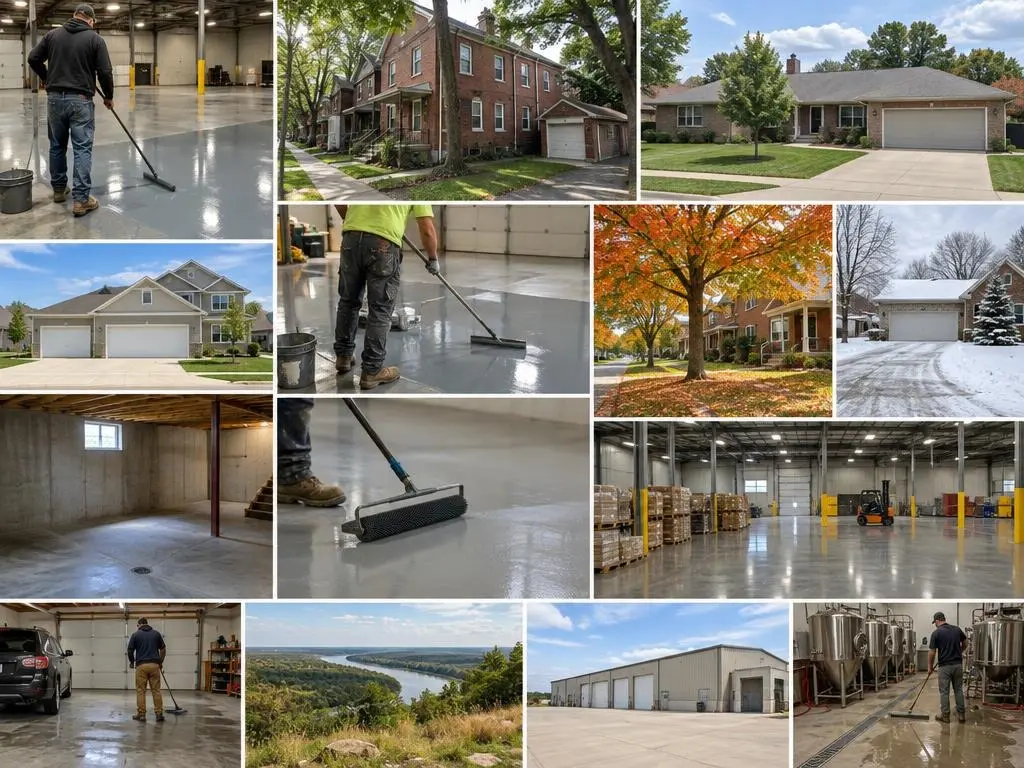
Garage Floor Epoxy Service Areas
- Epoxy Flooring in St. Louis, MO
- Epoxy Flooring in Clayton, MO
- Epoxy Flooring in Ladue, MO
- Epoxy Flooring in Kirkwood, MO
- Epoxy Flooring in Webster Groves, MO
- Epoxy Flooring in Brentwood, MO
- Epoxy Flooring in Maplewood, MO
- Epoxy Flooring in Richmond Heights, MO
- Epoxy Flooring in University City, MO
- Epoxy Flooring in Creve Coeur, MO
- Epoxy Flooring in Chesterfield, MO
- Epoxy Flooring in Ballwin, MO
- Epoxy Flooring in Town and Country, MO
- Epoxy Flooring in Des Peres, MO
- Epoxy Flooring in Florissant, MO
- Epoxy Flooring in Manchester, MO
- Epoxy Flooring in Hazelwood, MO
- Epoxy Flooring in Maryland Heights, MO
- Epoxy Flooring in St. Charles, MO
- Epoxy Flooring in O'Fallon, MO
- Epoxy Flooring in Wentzville, MO
- Epoxy Flooring in Affton, MO
- Epoxy Flooring in Mehlville, MO
- Epoxy Flooring in Arnold, MO
- Epoxy Flooring in Fenton, MO
Get a Garage Floor Epoxy Estimate
Get garage floor epoxy priced in writing after a free visit to your St. Louis garage.